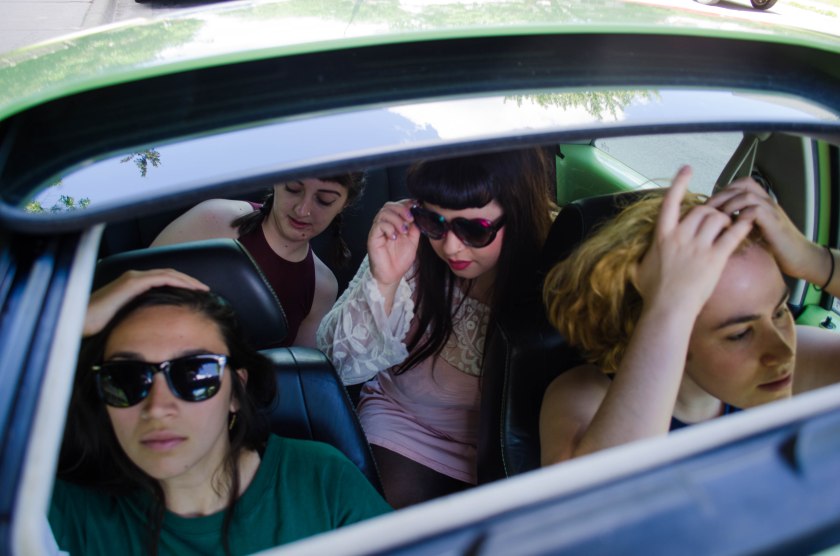
FESTIVAL: SAPPYFEST

Before ever visiting the east coast, my partner, who I met in Ontario, repeatedly told me that not only was the east coast the best place in the whole world but Sappyfest was the best weekend of the whole year.

I went to Sappyfest 12, and during my flight home, I felt like I was missing something – why didn’t I feel how my partner told me I would feel? The weekend was physically, mentally, and emotionally exhausting; I couldn’t keep up with the names and faces I was being introduced to nor were there many moments where I felt at ease.

After graduating from my Master’s program this spring, my partner and I decided that we would spend our summer in Sackville before moving to Halifax mid-August. Although I was apprehensive, it didn’t take much time in Sackville before I felt what they told me I would feel on the east coast. I have seen the landscape, I have gotten to know the faces that I previously (yet briefly) met, and I have been answered when I’ve asked for help or support.

sackville

Sappyfest 13, though still exhausting, was a beautiful and life-giving experience. I felt less like an outsider – or an extension of someone else – and more like a whole person that contributed in some way to the moments that make Sappyfest as special as it truly is.

Before offering a few of my favourite moments – that maybe you bore witness to as well – I want to make a quick note of something about Sappyfest that I think is notable, though shouldn’t necessarily have to be noted.

Sappyfest promotes diversity, marginalized folx, and Canadian artists. The line-up, of all Canadian artists and musicians, was predominately womxn: queer womxn, womxn of colour, indigenous womxn. I applaud Sappyfest for having a lineup that celebrates music from non-men, and especially non-men with intersecting identities, and encourage other festivals to do the same.

Anyway – here are not your boys club top three Sappy 13 moments:

1/ Witch Prophet (TO) is Ayo Leilani, an independent, queer, Ethiopian/Eritrean mother. She played early on Saturday night as people were just starting to make their way back to the tent after an already full day of music and art. Her layered vocals and harmonies over hip-hop and jazz inspired beats captivated the crowd and had everyone in the tent dancing. What had already felt like a powerful performance, brought me to tears before her last song, Love Shock. Ayo told us how she wrote this song for someone she fell in love with too quickly who didn’t reciprocate these feelings until they heard this song. They asked Ayo if she would perform this song, and confessed they would like to be present every time – and they have been – this person is Ayo’s DJ, Sun Sun, who was on stage with her.

witch prophet

2/ Rotten Column (TO) played late on Saturday night at the (sweltering hot) Legion after Washing Machine (HFX). Penny, who fronts the band (vocals/tin whistle), kindly asked everyone to be pillows for each other once people started to mosh. A friend of mine, who was enjoying the show from the front, was definitely not enjoying the boy that kept bumping into her despite her obvious irritation. Jarrett (bass) not only recognized this discomfort but also stepped in and placed his body between the mosher and person who didn’t want to be moshed against without missing a single note. Taking care of each other and keeping people safe is as punk as it gets.

rotten column

3/ On Sunday night, Julie & the Wrong Guys (TO) closed the main stage. I know it was a great set because I remember recognizing how much fun everyone was having, but I had a difficult time being attentive to Julie’s soft vocals and the Wrong Guys heavy rock music. Earlier that day, I promised my partner that I would crowd surf for the first time with them and the anticipation made me too nervous to focus. I had never crowd surfed before for two reasons, 1) I’ve never trusted a crowd to keep me safe, and 2) I’ve never wanted to put someone in a position where they involuntarily have to keep me safe. I still stand by the latter, but I do trust the crowd at Sappyfest.

julie & the wrong guys

Also – many of you said hi to me and expressed you knew who I am and what I do, visited me at the zine fair, and even bought and wore an nybc shirt or pin. Thank you. Your support and encouragement is so meaningful to me.

See you at Sappyfest 14.


OUT OF EARSHOT: INTERVIEW #3 – RACHEL FROM RABIES/SURVEILLANCE

As part of the media coverage for Out of Earshot’s inaugural festival on the weekend of August 23-25, 2018, not your boys club will be showcasing some of the truly wonderful people organizing, playing, and performing at the festival in the weeks leading up to it.

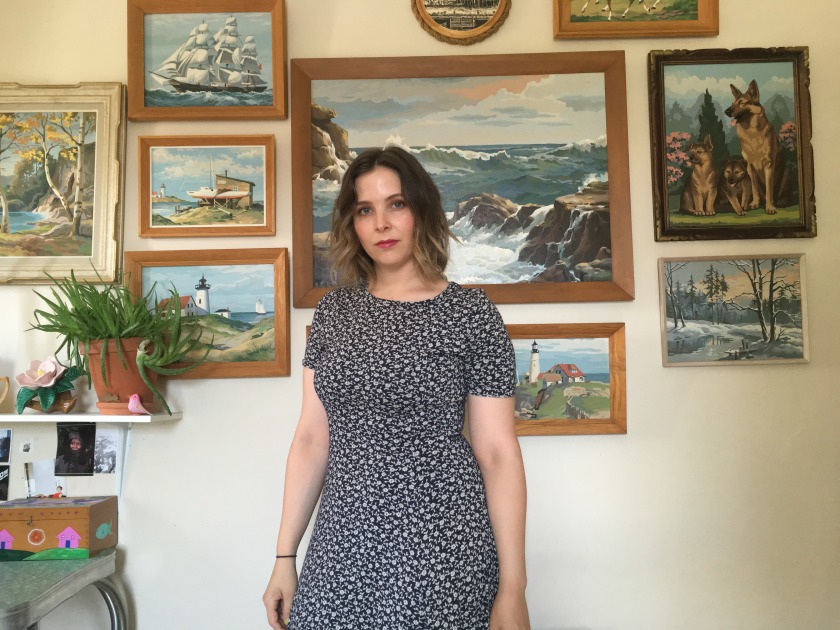
For the third interview in this series, I spoke with Rachel (she/her) from Rabies (vocals/guitar) and Surveillance (vocals/bass). Originally from rural Ontario, where she grew up on her family’s farm, she is now living in K’jipuktuk (Halifax, NS).
rachel rabies.jpeg

Photo by herself

I’m curious about your initial introduction to playing and writing music. What inspired you to start making music?

Both my dad and brother are talented bluegrass guitar players and many of my family members are musicians or music fans, so music has always been a big part of my life. As a teen, I went to a lot of shows and always wanted to perform and play in a band, but I had no idea how to get started. I played acoustic guitar a little bit (my brother and dad had helped me learn some chords) but I was mostly playing Tegan and Sara covers secretly in my room, and playing in a band seemed impossible. I thought it was an impenetrable world to me and I was too embarrassed to admit that I wanted to participate.

When I got a little older, I continued to go to shows and my desire to play didn’t fade away. I spent a lot of time talking about this with my partner Dave (guitar in Surveillance/drums in Rabies), who had been playing music since we were teenagers. Together we worked through a lot of the complex feelings and emotions we had around playing music and everything that was holding us back from being creative.

He supported me, and helped me push through my fears, and together we started the band Surveillance when I was in my mid twenties. He really wanted me to have a bass because I could play it just one note at a time so he got one for me for about $80 on Kijiji. Dave had a few songs already written that he had imagined playing in a band, so I learned those songs on the bass and we practiced them together in our apartment.

We have a broken “Fender Jam” amp with a really distorted setting and I loved playing my bass through it – the distortion covered up my mistakes, and it just sounded big and bad in a way that I really liked. I’d practice the songs that he’d written, and we’d also have “Free Jams” where we would encourage one another to stop worrying and just play.

Dave and I did work on some songs together in our early days, but I don’t exactly remember how I started writing songs on my own. I was practicing alone pretty often and I would just hear combinations of notes that I liked, and sing over it. Sometimes because singing and playing at the same time was too hard, I’d open GarageBand on my computer and record the bass line, and then sing over the recording. I added different tracks, and would just experiment by making demos. I think the first song I ever wrote for Surveillance on my own was, “Bud” and I remember playing the demo I’d made for Dave when he got home from work. He was just so excited – he has always been my biggest fan. The encouragement really motivated me and eventually I figured out on my own that I love writing songs, but it was really hard not to feel self-conscious. Over time I became used to the idea that I was a songwriter, but I am still working on building my confidence as an artist.

I eventually started playing guitar through the same distorted “Fender Jam” amp, and I picked up my guitar everyday single day for a really long time – practice has always been really important to me. I still don’t have a lot of technical knowledge and I think that is my next step – learning the names of the chords and notes that I’ve been playing for years. Doing it kind of backwards has really worked for me.

So, now that you’ve broken through a world you once felt was impenetrable, what would you say to youth that feel the same way that you did when you were a teen?

I think for anyone who wants to play music – whether they’re young or old – the best thing you can do is just try. Get your hands on some cheap gear and get started. It used to drive me bonkers when people said this to me, because I felt so vulnerable and confused, and starting from scratch is extremely hard. It’s so easy to feel embarrassed. When I found a way to practice that felt okay, and found some like minded people who made me feel empowered, I was able to actually visualise myself playing in a band. If you can’t find those people in real life, look to musicians and bands that you love. Explore the world of musicians and their history – there are a lot of inspirational stories out there.

It’s also really important to find a way to enjoy playing because there is no way around it – you have to practice. So experiment, and find a way that works for you – whether it’s learning covers, trying to play along to songs you love, taking lessons, jamming with friends, writing serious or silly songs, or just slamming on your instrument to make noise – just find something that feels right and keep it up.

And remember that anyone who tells you, or implies to you, that you’re not good enough, they’re wrong!

I read on the tumblr page that Rabies started as solo project, and later developed into a band – can you tell me a little bit about the formation of Rabies?

I can barely remember how Rabies started, even though it was only about three years ago. At the time in my life (my early/mid twenties) I was feeling pretty down. I tend to having really strong feelings about things in general, but I really only like sharing that side of myself with people that I trust. I’ve always been very private. I felt that through music I could express some of those feelings in a theatrical, kind of overblown way.

My songs aren’t typically overtly political, but they are usually written about my general confusion about the world, and informed by my feminist perspective. And you know, over time my feelings have grown and changed so sometimes some of the things I wrote about in the past are not necessarily things I feel now. Some of those feelings I wrote about are still very important to me (For example, the song “Rabid” is about being a settler living on indigenous land), and others were written about certain feelings or circumstances that have since changed (For example, the song “Celtic Frost” was written when I was feeling very insular).

For most of these songs, I just wanted a different feel than we had in Surveillance, and I had written a lot of them – enough to start another project. I knew I wanted the songs to have synth so I asked one of my dearest friends and favourite people, Jeremy Costello (of Aquakultre / Glenn Copeland / Special Costello). We played as a three piece for a while and decided to add bass. We didn’t want to ask just anyone to play bass, we wanted someone who would align with our approach and asked one of our close friends whether he knew anyone that played, or wanted to play bass that could join the fold. He recommended Bria Cherise Miller, who had never played bass before, but through our practice together she has became a close friend, an incredible musician, and a very important person in our lives.

As part of the Halifax music community, do you feel like it’s been an inclusive and supportive experience? Are there ways in which you feel like it could improve or be safer?

I can’t speak for the Halifax music community as a whole. I have witnessed and experienced various levels of inclusion and support, and over time an awareness of inequality and prejudice in the scene has been revealed – but this has certainly not been resolved. The scene continues to be divided, and at times deeply confusing and disheartening.

With that said, I have found, and continue to find many musicians, artists and organizations here who have helped raise myself and others up to feel included and capable (special shout out to members of the band Century Egg for being especially supportive). There is still much work to be done.

I personally believe that the best course of action to build a stronger, safer community is through direct support. Send messages of support to people who you think are doing good work, help new musicians book shows and access gear, break down the “skill” illusion, act as a mentor to people who are learning, encourage people to open their minds to different genres of music and experimentation, talk and learn about the history of imperialism, racism and sexism in music, question the sketchy bands and dudes and people, and try to create show line-ups that are actually good – not just based on who your friends are.

Outside of music, are there any other community involvements you participate in that empowers marginalized or vulnerable people (whether intentional or not)?

Over the years I have worked and volunteered for a number of community driven initiatives and organizations aiming to support marginalized communities, however I feel that the most impactful work that I’ve done has been in my personal education, and in the relationships and friendships I choose to foster and grow.

ALBUM REVIEW: “GOODBYE TONY” BY TONY PEACHKA

On July 16th, Tony Peachka (Minneapolis, MN) put out a surprise album called goodbye tony two days before their final show where they said farewell to their main lyricist Melissa Jones (guitar/vocals).

This five-song EP, similar to their debut album dirty knees, is a cute but fierce, delightful yet dangerous, angry but self-aware, punchy garage pop album about general discontent, coping mechanisms, and working through existing in 2018.

Fruit Salad, the first track on the EP, opens with the lyric, “I lighten my hair / in hopes it’ll lighten me elsewhere” which sets the tone for a song that is about learning how to cope when change feels hopeless. The following song, Gossip Girl, is about turning around feelings of general discontent (“I’m bored / I’m horny / I work too much / I’m lonely” and “I’m tired / I’m hungry / I eat like shit / I’m lonely”) yet being unable to keep up with them as they pile too high. My personal favourite, I Don’t Know, is critical of and confused by the heteronormative script and milestones that we are meant to reach within relationships (“move in together / write a cover letter / end up hating each other”).

Tony Peachka wrote relatable songs for people (like me) in their mid-twenties trying to, but only barely, keeping up with their responsibilties, social commitments, and relationships all while having boundaries and taking care of themselves. This album is an anthem for coping.

goodbye tony.


tony peachka.jpg

Photo by Tessa Loeffler

STAFF CONTRIBUTION: Nikki A Basset

OUT OF EARSHOT: INTERVIEW #2 – RENEE SHARPE

As part of the media coverage for Out of Earshot’s inaugural festival on the weekend of August 23-25, 2018, not your boys club will be showcasing some of the truly wonderful people organizing, playing, and performing at the festival in the weeks leading up to it.

For the second interview in this series, I spoke with Renee Sharpe (she/her), a long-time feminist punker living in St. John’s and singing in Worst Lay. Her active role in the community starts from a place of creating what she needs and inviting other marginalized people into the space who may need it too.

worst lay 2

Worst Lay

I want to start this interview by asking about your introduction to playing music and participating in the music community, specifically the punk scene.

I’ve been in playing in punk bands since I was a kid, and I’m 36 now. It’s been my favourite way to hang out with my friends and write lyrics that are true to the specific community building I’m interested in at that moment. As a long-time feminist punker, it’s always been my focus to create spaces that are kind of like “yo, you are welcome here if you are into anti-oppression frameworks” from within in the punk scene. My favourite way to do that has been to play in bands and invite people to play in bands with me; I take whatever is upsetting me in the moment and I get real loud about it. I’m a loud kind of woman, and I’m usually the one with the mic. Punk is one of the ways that I can have the mic in the community, and give the mic to others who are pretty under-represented. Punk is definitely not my defining point in life, and it holds less and less importance to me. It is a youth subculture that gets on my nerves, but I do find myself sticking around chasing that feeling that only a ripping band with friends can give you.

Can you share a little bit about the formation and origins of Worst Lay?

Worst Lay came from feeling pretty isolated and is one of a series of things I’m doing for myself to not feel so alone in a predominately cis male scene. So, it started as one of those things where me and my real good friend Mara were just talking about what bums us out, the darkness that we have in our gut, and just not having access to things like counselling. From this I just felt like we needed to start a punk band, but Mara has never been in a punk band, like, she’s in Hey Rosetta!, so even though she’s the biggest punker I know, she has just never been invited to be in a punk band. I told Mara that we should just make some dark noise and talk about what bums us out; it could be our healing process. We then invited our friends Pepa and Jono to start the band with us. Like anything I do, it just ended up being your typical in-your-face, short, fast, and loud punk band which is my favourite thing in the world.

I ended up singing, and I’m 36 now, but one of the lyrics is like, “I’m 35 years old / I piss in my pants / all these men / why am I still here”. I literally piss in my pants now that I’m 36 and yelling in a punk band (haha), like why am I still here, in punk? It’s still predominantly men in the scene, but for me, it’s punk therapy. That’s what the lyrics are about. It’s my favourite place, punk, it’s the easiest place for me to work from as kind of a springboard for what I care about: justice. So even though, since I was like 18, I ask myself why I am in a scene that usually disappoints me, it still gives me the freedom to do whatever I want and create the community I feel like I need at the time to heal and work against the patriarchy collectively. So, that’s been my work in punk since I was like 16. It doesn’t work and it usually disappoints, but we build community where we can get it. My community work extends far beyond punk, and I’m working more on healing and being soft these days – but I’m still here.

Where did the name Worst Lay come from?

The name Worst Lay comes from one of our songs, Candy, which acknowledges patterns in relationships that I’ve had with men where when I don’t want to fuck, they say that they would be depressed, sad, or bummed out if we don’t have sex. So then I would have sex with them to save our relationship. That’s the worst lay. It’s about consent. It’s the worst lay to have sex with someone when you don’t want to.

As an active member of the music community in St. John’s, could you describe to me ways in which the St. John’s music scene is inclusive and safe, and ways in which it, like any other city, could improve?

I lived in Montreal before I moved back home a few years ago. In Montreal, we had a very hot and inclusive scene. We were just very queer, very anarchist, very “on it”. We definitely still had lots to work on with our lack of representation, but it was the most inclusive, diverse, and supportive scene I have been apart of. We put on this thing called “Band-Off” where we would invite people from the community who wouldn’t always necessarily feel invited out to shows. People would come, we would put our names in a hat, and then that was your random band. We did that a few times and it significantly increased the amount of women, trans folx, and (ideally) other underrepresented people that would come out to our shows, pick up instruments, and play in their own bands. So I brought that home to Newfoundland. When I arrived I was looking for the women and queer folx, but with no surprise, it was my usual disappointment with the scene. I wanted to see the kind of bands that I like, and hang out with people that I can relate to, so I did a “Band-Off”. It worked. I did it a few more times, and since then, there have been so many women, queers, and politically charged freakers and ragers playing in bands and making music. It wasn’t just me, obviously, there were other groups like St John’s Womxn in Music (SWIM), Girls Rock, and now Out of Earshot. There’s still work to do – it’s still real white. There’s a lot that can be done for diversity and being inclusive without tokenizing people. It’s always about sending out that invitation, and making sure everyone feels like they are welcome if they want to come.

Finally, I wanted to ask you more broadly about the ways in which you promote a safer and more inclusive community outside of the music scene.

Totally, yeah. So, I’ve been taking Wen-Do Women’s Self Defence since 2002. My first experience with it was fucking revolutionary, and I’ve now been teaching it since 2011. From a feminist anti-oppression framework, it basically looks at the way women experience gendered violence and it starts with an acknowledgement that women can, and know how, to defend themselves. When we – by we, i mean, cis women, trans women, and gender non-conforming folx – fight back, we actually get away effectively. We are stronger and smarter than the world tells us. We talk about how to protect ourselves and support others in the community that have been targeted by bullying and harassment, have experienced sexual assault, and are in abusive relationships. Then we move forward with physical defense strategies that are made for our bodies (just as they are) that can be used against someone that wants to hurt you. This person is probably someone you know, or is someone in your community with power. We aren’t looking for that racist trope – that tall, dark, stranger in the bushes – we know that it is usually someone we know and trust who we need to defend ourselves against. It is crucial to understand the realities of our experience and name them, so we can give ourselves permission to act and get to safety. Wen-Do is an acknowledgement of this, and it’s an empowerment piece. It’s quite incredible. It’s what I do.

I also host the Renee Sharpe Show, which is my favourite thing. I invite people on – who are definitely not punk (haha) – and I celebrate them. I like celebrating people and making them feel good about themselves; I like giving them a spotlight. We just shoot the shit. It’s cool. It’s my thing.

I guess finally, I’m always trying to create what I need. I’m hosting something called Hold Space, an active-listening workshop that acknowledges how a lot of us are feeling isolated from a lack of community. Hold Space is a thing that I think can help us all figure out how to hold space for each other. I will give a short introduction on what it looks like to actually active listen and how that can feel for a lot of us that need that. The other part of it is working through how you can actually ask people to hold space for you. If you feel like no one hears you, or you (like myself) are the person in the community that everyone goes to, it can be difficult to learn how to ask for that support. It’s kind of like an exercise in community building 101 and how to better support each other. Another part of it is kind of like speed dating. We have chairs set up, we move every 5 minutes maybe, and after asking for permission to hold space, we practice active listening and accepting that support. You don’t spend that time thinking about what you are going to say to fix their problems; you just be that person for them that listens. I think it’s going to be really cool and I’m excited to try it out.


STAFF CONTRIBUTION: Nikki A Basset

SHOW: BUFFY SAINTE-MARIE AT CONCERT OF COLORS

The Concert of Colors – now in it’s 26th year – is a festival that happens in Midtown Detroit. It also happens to be FREE. Yep. Totally and completely free. While the Concert of Colors may have some major sponsors (Meijer, Ford, Comerica) they partner with important local, Detroit-based community organizations as well –  like the Charles H. Wright Museum of African American History, ACCESS, The Detroit Symphony Orchestra, and more.

The word community was spoken a lot during the Concert of Colors series community-building was apparent in how accessible they made the festival. Since the festival was of no cost to attend, it was made accessible for folks who might otherwise not have been able to enjoy and participate in the festivities. The assistants at the Detroit Symphony Orchestra made the building accessible to the public by providing door-people to open doors and navigate any questions. Even Grandma Techno could be seen scooting around the Concert of Colors festival inside at the Detroit Symphony Orchestra main stage as well as the outdoor Wolverine Stage where many local Detroit acts showcased their talents.

When I heard Buffy Sainte-Marie was going to be at this festival, I could barely believe it. Buffy has been an Indigenous figure in Canadian politics and history since she was in her early twenties in the 1960s. Today, at 77 years old, Buffy Sainte-Marie is still performing regularly and speaking out as an advocate for Indigenous rights, and on the importance of community.

Buffy Sainte-Marie graced the stage with a huge smile, leather jacket embroidered with roses, and an ienergy that instantly filled the room. Buffy has such a range of sounds: did you know she wrote the track “Up Where We Belong“? It was oddly satisfying to hear this all too familiar track with her unique vocals. Her banter between songs included stories about songwriting, performing on Native reserves, racism and sexism, what it was like to be performing as a woman in her early career, among other things, but always on an end note of uplifting empowerment. Buffy performed other significant anthems like her newer track “The War Racket” with a flat-toned range but a heavy punch. The beat from “You Got To Run” had people up and out of their seats dancing in front of the stage.

“Down, in a hole / You feel like two different people in your soul / Feel like a loser, until you see / That as you bend / You learn to be / Your own best friend”

These powerful songs, about standing up for your beliefs and letting yourself be afraid but acting anyway, obviously resonated with the crowd. The age range was significant; from people in their mid-twenties to over 70 – I spoke with a couple of self-declared hippies who seemed to be among the majority. There were even a few children with the noted earphones bobbing with parents along to the beats of Buffy Sainte-Marie and her trembling vocals. As Buffy mentioned during the performance, we are experiencing the same issues from 20, 30, and 50 years ago: racism, violence, war, capitalism, and greed. The blending of Indigenous folklore and sound with a modern day message is not something to be missed.

“Sometime you gotta take a stand / Just because you know you can / Ah you got to run you got to run”

buffy ste marie.jpg

Photo by Jann MacIsaac

See Buffy Sainte-Marie live…

August 4th @ Kalso Jazz Etc. Summer Music Festival, Kalso BC

August 6th @ Canmore Folk Music Festival, Canmore AB

August 9th @ Edmonton Folk Festival, Edmonton AB

August 11th @ Stillaguamish Festival of the River, Arlington WA, USA

September 9th @ SKOOKUM Festival, Vancouver BC

October 19th @ One Heart Native Arts & Film Festival, Spokane WA, USA

November 16th @ Koemer Hall, Toronto ON


STAFF CONTRIBUTION: Carley Schweitzer